Posts

Showing posts with the label squatter camp

What does it take to lift a child out of the slum?

Image
Murshida, resident of Topsia canalside squatter camp is 18 years old. She has just completed her final school exams. Her father is a tuktuk driver who earns about £2.50 (Rs200) a day.  Most girls in this community marry at 12 or 13 years old but Murshida and Tiljala SHED's staff persuaded her parents to let her continue her education.  Murshida has attended Tiljala SHED's classes since she was small and aspires now to become a teacher. She shows every sign of accomplishing her ambition. So how does it worK? How does a child born in a shelter beside a railway line in Kolkata escape the cycle of poverty?   With illiterate parents, mother a rag picker, father a rickshaw wallah and often too drunk to work, both repeating the cycle of 2 or 3 generations since the family escaped starvation as landless rural poor by moving to the big city for a better life?   How can an anxious mother with 6 or 8 mouths to feed every day even think beyond the immediate daily i...

In Praise of India's Rag Pickers on International Women's Day 2018

Image
So, according to this week’s The Economist (March 3 rd 2018), India’s “armies of ragpickers” are responsible for the fact that India does not feature in the world’s top ten biggest plastic polluters.   Despite having the world’s second biggest population at 1.3 billion. India is poor enough, it goes on to say, for ragpickers to exist, unlike Asia’s biggest polluters, like Vietnam, which isn’t.    Well, good for India.   Good for those entrepreneurial souls who can literally make a living from rubbish.   Producing a meal from the proceeds of ragpicking I should also mention on this International Women’s Day that the vast majority of those rag pickers are women.   Illiterate, destitute, and living in illegal makeshift shelters beside railway tracks, canals (open sewers) or on the streets, they scour the streets for waste that they can sell on to dealers.   They are looking for plastics, paper, cardboard, metals – anything they can sel...

The importance of a good education

Image
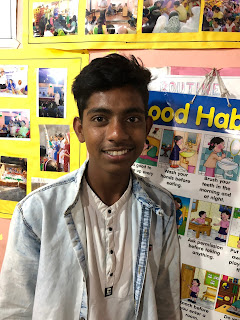
Education is one of the most effective agents of change in society. When a child is able to go to school today, he or she sets off a cycle of positive change. But, thousands of children in India lack access to education and can’t even write their own names. (CRY India) Rehan wants to be a software engineer This is Rehan. He is 14 years old and lives with his parents in a makeshift shelter in the Topsia Canalside Squatter Camp, a narrow strip of land with huge open sewers running down either side.  There is no proper sanitation, no toilets and the 2 drinking water taps (for 710 families) operate for just a few hours a day.  Many of the residents here are rag pickers but all work in the informal economy: rickshaw drivers, fruit sellers, daily labourers.  Illiteracy, child marriage, child labour, domestic abuse, alcoholism and substance abuse are rife. Rehan’s father is a rickshaw driver earning Rs3000 – 4000 (£33 - £44) per month. His mother is a housewife. Rehan’...

My Experience of Kolkata’s Rag Picker Communities and Tiljala SHED’s Amazing Work there

Image
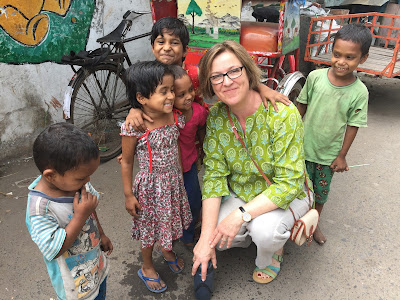
I visit Kolkata and Tiljala SHED two or three times a year. I love to catch up with old friends and spend time exploring my favourite city.  But most of all I love to be part of the great work Tiljala SHED is doing amongst the city’s most vulnerable communities.   Those who live in the canal-side and railway squatter camps of East and East Central Kolkata lead the most difficult lives.  Originally landless poor from rural Bihar and West Bengal, these families would have come to the big city for a better life. And in some respects, that’s what they have: the chance to collect, sort and sell other people’s waste enables them to eat.  They build illegal shelters on government owned land but are mostly left alone.  Occasional home-destroying fires, disease, lack of toilets and sanitation, drinking water rationed to a few hours a day are probably seen as a reasonable trade-off for leaving the hunger and backwardness of their former rural lives....